When working with hydraulic torque wrenches, access is often the biggest challenge on the job.
In many industrial applications, there simply isn’t enough room around the fastener for a standard socket setup. That’s where low clearance hydraulic torque wrenches come into play.
These tools are commonly used across industries like oil & gas, mining, manufacturing, forestry, and heavy equipment maintenance where large fasteners are installed in tight or obstructed areas.
A low clearance hydraulic torque wrench system is made up of several components that work together, including the power head, cartridge, ratchet link, and spanner.
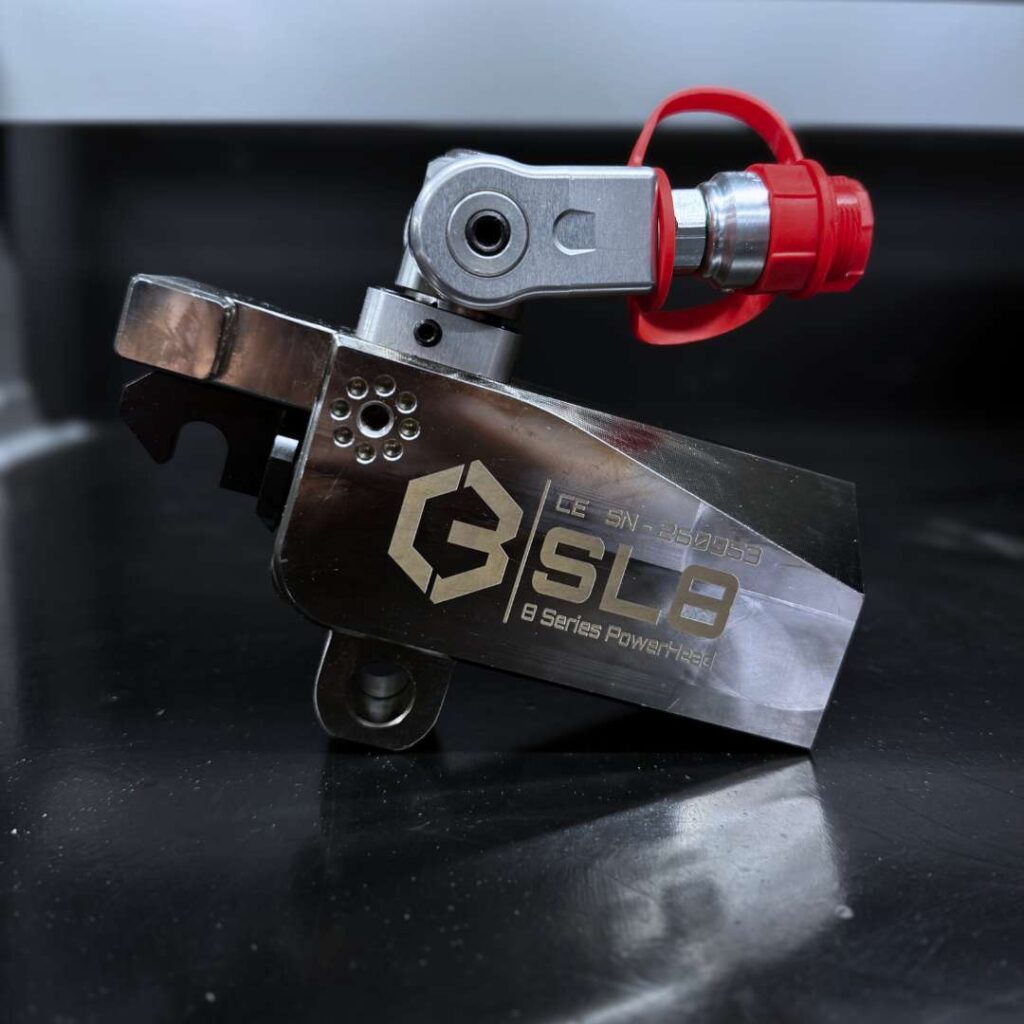
The power head is the hydraulic drive portion of the tool. This is the component that generates the torque.
Different attachments can connect into the power head depending on the application and fastener access requirements.
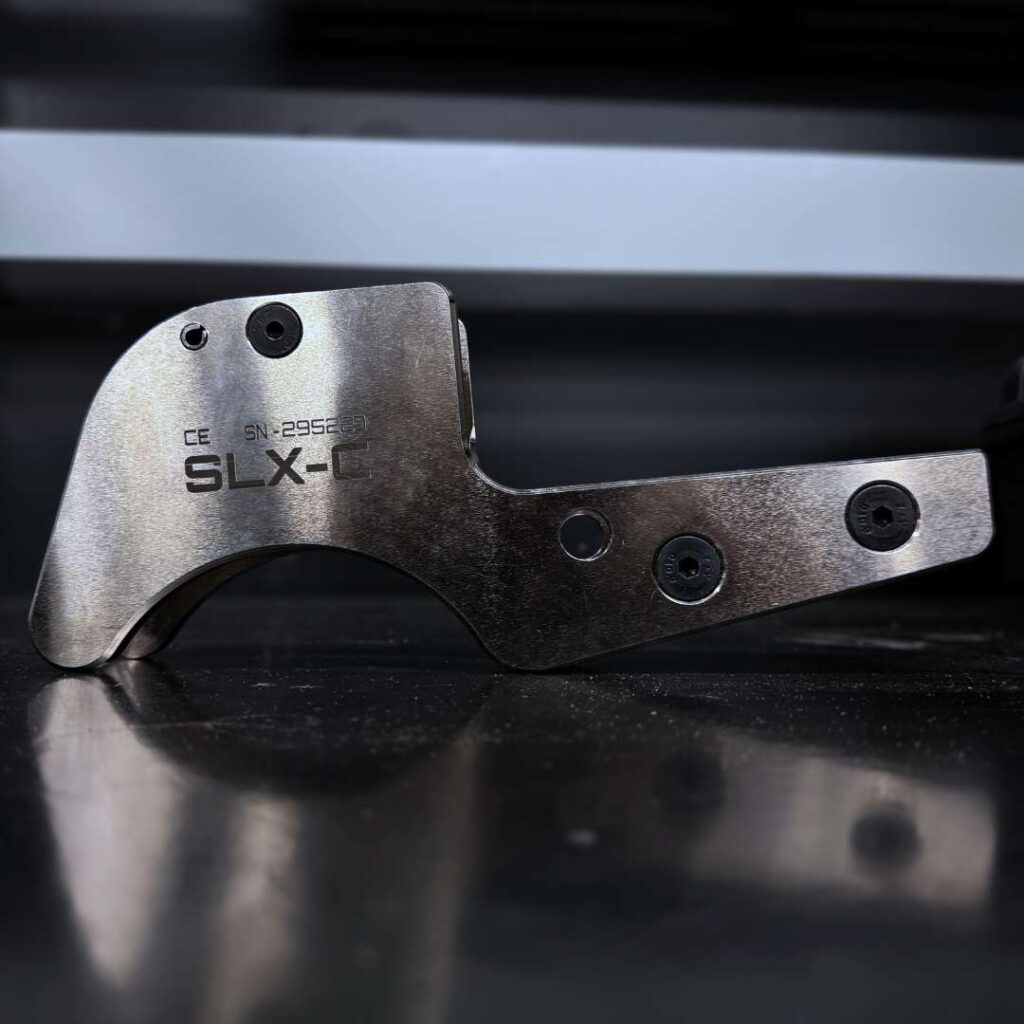
Both ratchet links and cartridges connect directly into the power head.
A ratchet link, also referred to as a cassette, is a low-profile attachment designed for specific fastener sizes. These are commonly used in applications where there is enough clearance to place the cassette directly over the nut.
A cartridge works differently. The cartridge itself connects into the power head and allows additional ratchet components or spanners to connect into it depending on the setup required.
This gives technicians more flexibility when working around restricted access areas or unusual bolting situations.
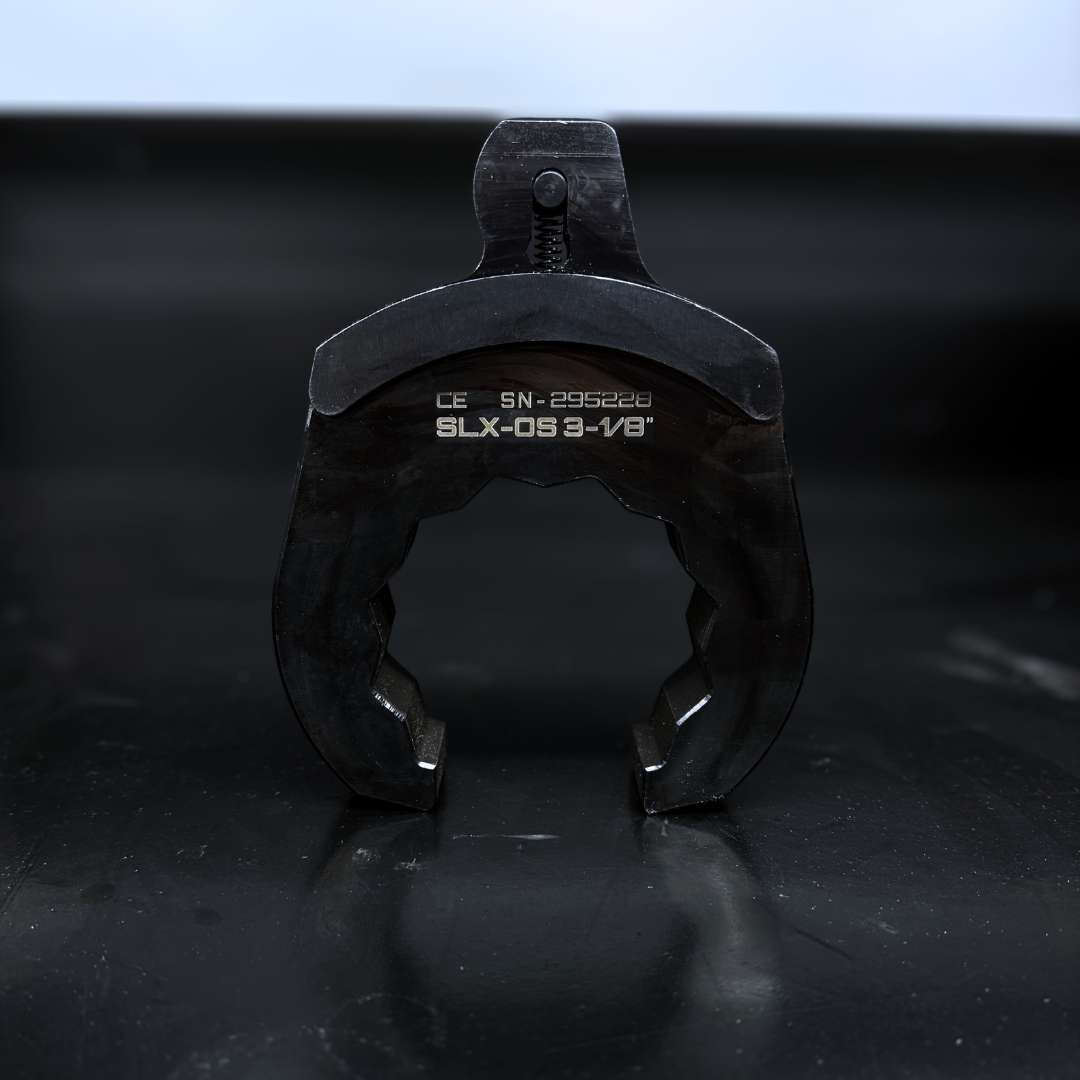
Ratchet links can use either open or closed spanners depending on the application.
A closed spanner fully surrounds the nut or fastener. This style is commonly used when there is enough room to slide the tooling directly over the fastener.
Open spanners are designed for applications where a standard cassette or closed setup cannot fit over the bolt.
Instead of sliding completely over the fastener, the open section of the spanner allows the technician to position the tooling around the side of the bolt instead.
This is especially useful in tight access areas where surrounding equipment, pipe, studs, or structural obstructions prevent the tool from being installed traditionally.
In refineries, mills, and processing facilities, technicians regularly work around piping systems and equipment with very limited access around fasteners.
Open spanner setups can help crews work around obstructions that prevent a full cassette from fitting into place.
Large equipment assemblies on crushers, mills, and processing systems often have guarding, supports, or structural components that limit tool positioning.
Low clearance tooling helps crews reach fasteners without unnecessary equipment removal.
Manufacturing facilities and heavy industrial plants frequently have fasteners located close to frames, mounted equipment, and structural supports.
Different cartridge and spanner setups allow technicians to adapt the tooling to the space available.
Access limitations can quickly turn a simple bolting job into a time-consuming process.
Low clearance hydraulic torque wrench systems are designed to help technicians work around:
Using the correct combination of ratchet links, cartridges, and spanners helps crews apply controlled torque loads in areas where traditional tooling setups may not work.
Low clearance hydraulic torque wrenches are built for applications where standard tooling struggles with access limitations.
By using different combinations of cartridges, ratchet links, and open or closed spanners, technicians can adapt the tooling setup to fit difficult working environments across a wide range of industrial applications.